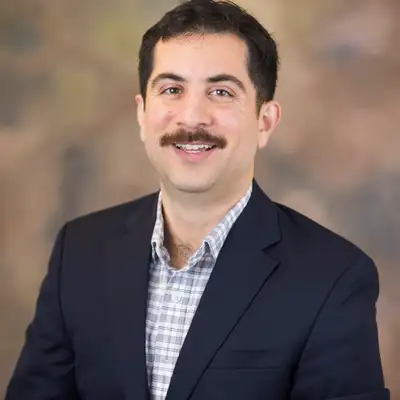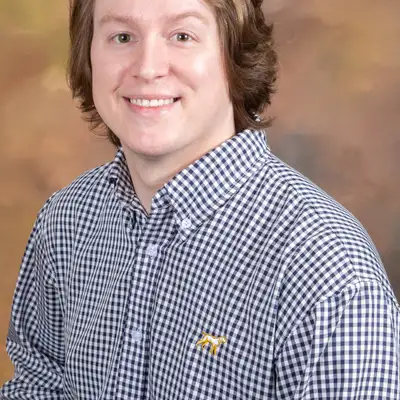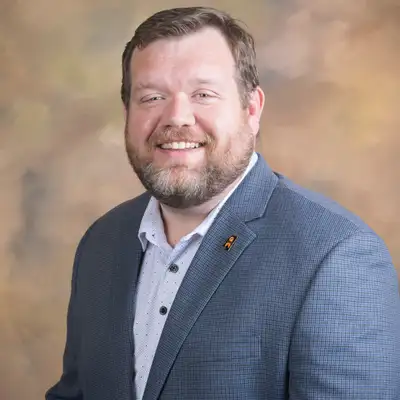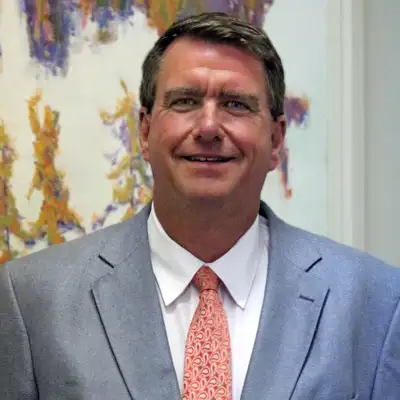
Legislative Session 2026: Delta Council Representatives Walton Gresham and Frank Howell
MDOT presents the Extra Mile Podcast.
Paul Katool:Welcome in to another edition of the Extra Mile Podcast presented by the Mississippi Department of Transportation. I'm Paul Katool, and as always, joined by my cohost, Will Craft. And we're, mixing up the scenery today. We wanted to have a little bit of fancy scenery. MDOT Executive Director Brad White has let us let us in his office.
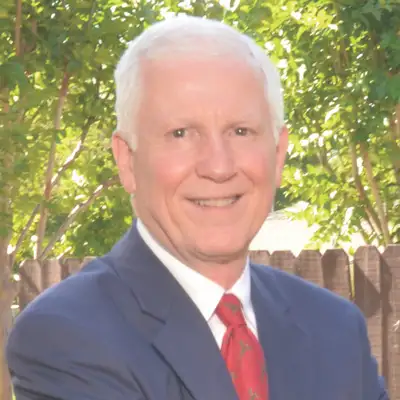
Paul Katool:Can't really see, but we're overlooking the capital. We have two very special guests today. We have Walton Gresham and Frank Howell, and they are both representatives of the Delta Council. Gentlemen, thank you so much for joining us today in in Jackson.
Frank Howell:We're glad to be here. Thank you.
Paul Katool:Awesome. So I know me and Will, a lot of the a lot of our listeners, our viewers know what the Delta Council is, but let's start off real simple. Can you tell me in your words what the Delta Council is and what it hopes to accomplish?
Walton Gresham:Delta Council, I'm gonna go back to the nineteen thirties. Delta Council was formed back in the nineteen thirties by a group of men who were concerned with flood control. Okay. That was the original original purpose of Delta Council that there was no levy that came all the way from Memphis all the way down to Vicksburg to a one unified levy system and so that was why Delta was formed. It then transformed into worrying about working on highway improvement through the Delta, then education and health over the years.
Walton Gresham:But its main focus at the beginning was flood control and so I don't know whether you got anything to add to that.
Frank Howell:No. I think it's it's a unique organization in the sense that it's 19 counties but those 19 counties share a lot of similarities and People in The Delta move around a lot, business does, personal lives and people in The Delta identify as Deltans. Walton's exactly right. Those three major issues flood control, agriculture and transportation do not respect a city border or a county border. In The Delta, they're all it's all connected.
Frank Howell:The roads are, the bodies of water that imperil us are, and certainly agriculture is pretty similar throughout the footprint. So it it's a unique place for a unique regional organization.
Will Craft:Absolutely. Very familiar. Been to the the events, over the years. Lots of fun. Always appreciate you guys and all that you do for Delta for for the Delta.
Will Craft:And like I said, got can I get a little bit of a history there? Been around for a long time advocating for lots of great causes for the Delta, for the state as a whole. Speaking on that, what what got what brings you guys to Jackson today?
Walton Gresham:Well, I think it was time for us to reconnect with Brad and M. Dodd on I 69 project that comes through the middle of the Delta. And what I would say is I'm a quote somebody a man named Dick Hall who was central commissioner or highway commissioner. He said that I 69 was gonna be the biggest economic development project in in the in the Mississippi Delta history. Wow.
Walton Gresham:If you look at it coming from all the way from Memphis, Tennessee and exiting somewhere around Greenville or North of Greenville, it can have an impact on most of the Mississippi Delta. And so we're down here to reconnect with Brad. Over the past couple of years we have not had I'm gonna say Brad has not had good funding to be able to to fund I 69. There's a move now to to increase the federal part which would help the state state match and we hope to get this project rolling again.
Frank Howell:And one of the things that we're at the Washington level that we were anxious to share with y'all's leadership was that there's a new funding proposal among congressionally authorized interstates that are multi state. So there's a select few around the country that are high capacity, high priority. Interstate 69 is. Incidentally, Mississippi has Interstate 14 which recently got authorized through the south part of the state and from Texas to Georgia basically. So we're gonna be working at the Washington level and hopefully with the commission and with the MDOT with us saying this new funding proposal which would be a mechanism included in the federal reauthorization Whether that's this year or next year, we don't know yet.
Frank Howell:But when it is, we want to be able to put our best foot forward for those high priority interstates in the Yeah.
Walton Gresham:As well as I remember there were 13 of those that crossed several state lines that would be eligible for this money and hopefully now it's not gonna be enough money to finish it in two years Sure. Five years or ten years, But it'll get us started on it and it'll also help Mississippi because sure a lot easier to come up with a 10% match than it is play for the whole whole bottle of wax.
Will Craft:No doubt. No doubt about that.
Paul Katool:Absolutely. So let's back up a little bit and kinda talk about the, the origins of this project. So I I know you kinda mentioned a little bit, but it's not just going through Mississippi. Mean, is something from Canada all the way down to Mexico. Can can you kind of talk about the impetus of this project?
Frank Howell:Certainly. Walton, it's history. I'm on you you got more gray hair than I do.
Walton Gresham:Well, you know, I guess you'd say it started with, I'm gonna say Bill Clinton and Trent Lott. Of course, as Frank has said earlier, it goes from Michigan all the way down to Mexico and it's a freight corridor route. And it's trying to relieve some of the other I 40, the traffic off of I 40 going through Arkansas and Tennessee and it was started by Trent Light and Bill Clinton. Trent Light was majority leader in the house of the senate and and Bill Clinton was president and they got together and Michigan had already started on 69 Indiana had come on down to Kentucky and they got down here to Mississippi and Arkansas and they basically divided it up and part of it when it left Memphis came right on through Mississippi then through Arkansas about the same mileage and hopefully, you know, Trent was very good about helping push this along and getting it done like that.
Will Craft:Certainly.
Frank Howell:And a little bit of trivia, President Clinton's transportation secretary was a guy named Rodney Slater. He had come with the president from Arkansas, he was RDOT's executive director, but he was born in Tutwiler, Mississippi. So he was from Tallahatchie County, Mississippi.
Walton Gresham:And he was the secretary of transportation for Bill Clinton. So and he and Trent had a good working relationship.
Will Craft:We'll take it.
Frank Howell:That's right.
Will Craft:Yeah. However the connections will work there. Absolutely.
Paul Katool:All roads lead to Mississippi.
Will Craft:Exactly. That's for sure. One thing that it's it's obvious I'm sure to people on the inside and and looking at this, before we sort of get into some of these next kind of questions, but, why is this road important? I know you guys at Delta Council advocate for for all things Delta. What what is your your pitch, for this highway, this interstate coming through the Delta?
Walton Gresham:Well, as I said, quoted when I quoted Dick Hall, this is gonna be wherever interstates happen, economic development policy. You're not gonna you're not gonna build a a manufacturing plan or any kind of business out in the middle of nowhere where there's not a good road system to it. There are a couple of things that you need and this is one of them, a highway system that gets you in and out. No doubt. So that that and then of course there are other things that help you land the industry but I'm real concerned with economic development.
Walton Gresham:I think that this is Mississippi Delta's had a it's been hard economic development because it's so agricultural based. It's to get away from that and but it's slowly doing it and they're slowly economic development projects all around the Delta that are popping up or coming becoming available that hadn't been in the past and I think that this would really cement a good transportation system for the Delta.
Frank Howell:We enjoy an interstate on our far eastern border called Interstate 55. But adding another interstate that goes through the heart of the Delta and crosses and goes from there to Arkansas, Louisiana, and Texas, And, boy, you're talking about an economic heavyweight now Texas has become. Yeah. And so it just makes some things possible that frankly have not been possible.
Paul Katool:For sure. So listen. Hey. I think you sold us. It sounds like a great idea.
Paul Katool:And, you know, there's obviously a lot of planning and preparation that goes into major projects like this. So, really, I guess and you eventually have to get started, so what's kind of the plan to get this rolling?
Frank Howell:So the next segment that has been identified, as you all know, I-two 69 serves as a bypass around Memphis and goes through the heart of DeSoto County and all of the economic activity that they've got there. It's terminus now is in Western DeSoto County in the Delta and the next phase would be to take it from that terminus in DeSoto County and down to State Route 4 right south of the town of Tunica. It would go out in the countryside by Tunica's airport and also around some really good industrial property they have. And so that's the phase we're looking at next.
Will Craft:Absolutely. And I'll I'll I'll speak to that from an MDOT perspective. These gentlemen, again, met with our our commissioners this morning and and our MDOT leadership staff. And, basically, we have given that that commitment to to work on those. I think we had some maybe ten or fifteen years old, numbers that that we were sort of looking at here.
Will Craft:Our folks are gonna get updates on those and come back. I think we had a great meeting today, though, on that outlook.
Frank Howell:No doubt. And and, Will, I think it's important to point out when it comes back into State Route 4 on the existing roadbed of US 61, it will ride almost 60 miles on US 61. The right of way has been purchased. There are segments of it like around Clarksdale already built to interstate So it's not going to be as heavy of a lift as the first phase and then the final phase which will go from Marigold out through the countryside to the New River Bridge at Utah Landing south of Banoi.
Will Craft:Yeah. A huge project.
Frank Howell:Yes.
Will Craft:A huge project essentially. I mean, you have certainly, different phases, maybe different costs associated with there. But I would think, you know, probably a couple of billion dollars, after it's all said and done. And, again, that's that number can be scary, but in in these gentlemen's ears as well as mine here, I'm sure it rings, you know, economic development, future opportunities, workforce, growth, good things for our state coming through there. How about the conversations in Washington?
Will Craft:Are we going positive as far as this goes?
Frank Howell:Very positive. Great. Very positive.
Walton Gresham:This this will be what they're talking about the funding for these 13 interstate projects that go through different multi states. A lot of them have been stalled for years. Sure. Just like Mississippi's have. And so this will be a really if we can talk to congressional delegation into into put having this put into law where this funding will be available for Mississippi, Alabama, whoever has those projects.
Walton Gresham:It'll be a it'll be a real boost.
Will Craft:Absolutely. For sure. So, yeah, just
Paul Katool:to kinda reiterate on the funding that we need we need to get some funding
Will Craft:for
Paul Katool:this. Right?
Will Craft:We definitely need a couple more dollars. Paul says, money.
Walton Gresham:State of Mississippi has really been MDOT's been and I told y'all me in the gasoline business, I collect a lot of money for the state of Mississippi, the petroleum taxes. Sure. And it's been 18¢ since 1987.
Frank Howell:Yeah. There hadn't been any inflation, Walton.
Walton Gresham:And you know with what they just passed, the 3¢ a gallon for four years has really been able to allow MDOT to plan their roads programs over the next three or four years.
Will Craft:Yes sir.
Walton Gresham:And that plus the internet money and the lottery money that MDOT's gotten has really put them in a lot better position than they have been in the last twenty years to help push this project on.
Will Craft:Absolutely correct. Well, I'm just shameless plug there or or promotion that shout out and thank you to the legislature and our governor. That lottery bill, our new lottery bill signed got the, sunset removed. So I and I believe that's correct. I may be jumping the gun there.
Will Craft:But yeah. So that we keep keep that money forecasted into the future to to work on those projects just like you just mentioned. One one other question I would ask. You mentioned this is sort of a multistate, and that pot of money will will sort of represent a multistate projects. Where are we in relation to some of these other states?
Frank Howell:So you start up at the Canadian border. It's complete in the state of Michigan. Indiana is complete except for the Ohio River crossing in the town of Evansville, Indiana, and Kentucky is complete except for right there around that Evansville Bridge. And it's all part of the same project and it's a 2031 completion. Tennessee has gotten a lot of work around the Kentucky border, around the town of Union City that is complete this year, I believe.
Frank Howell:Then they've got another segment between Dyersburg and Union City that's slated for 2032, I believe. And then they are kinda like some of our other states like us, that they're going to wait to see the federal money before they finish Dyersburg down to Memphis basically. Mississippi and Arkansas and Louisiana are the three states that have done the least amount of work. Mississippi, of course, has done two sixty nine. Arkansas has bought the right of way for the bridge at Utah Landing.
Frank Howell:Senator Bozeman has given a couple of earmarks for work around Monticello through that route. And then from Monticello down to the Louisiana border, it's kinda like us. We're trying to build that out and same through a lot of Louisiana. Texas, as we joked earlier, they're not waiting for anybody to say Mother May I. They are building I-sixty 9 from Laredo and Brownsville and all those areas on the border all the way up to I-twenty and even all the way up to Texarkana and they're back complete and it's really amazing what they've done in a short amount of time Yeah.
Frank Howell:In Texas. And it just goes to show, if you got that kind of growth and those kind of state coffers, you can you can do a lot of things.
Will Craft:Quickly. Yeah. Absolutely. Texas is always on the forefront of infrastructure. No doubt about that.
Will Craft:Well, it sounds like, yeah, we're we're sort of in the middle. Some some done, some start, but a lot of work going on across a lot of states, for this one project as a whole, which, again, is it's crazy to think about. You know, this conversation started maybe back even before 1990 Yes.
Frank Howell:That's
Will Craft:right. 9394, somewhere probably in there. And now, you know, what, thirty thirty years later, thirty some odd years later, things are circling back. And wanna strike while the iron's hot. And a lot of this is on the forefront with reauthorization going on in Washington.
Will Craft:So I think, you know, again, MDOT is gonna come back once we get some updated numbers to have a little better meeting about this, but very optimistic on the outlook right now.
Frank Howell:Certainly. This is one of of the biggest, if not the biggest project that Delta Council's got on our plate for the future economic viability of the region.
Will Craft:That says a lot, yeah.
Paul Katool:Super important project. I just have one more question. So obviously this is a super cool, important project. I think I heard you guys also talking about the importance of some of the other transportation assets in the Delta. Talking about ports, rails, airports.
Paul Katool:So kinda just talk about the importance of those other, you know, transportation assets in the region.
Frank Howell:Well, Walton has business on the Mississippi River and he understands it better than anybody. That is a super highway that people do not realize is just a huge economic.
Walton Gresham:It really is. I was visited earlier with some of the engineers and I made the note that they're putting crushed stone down on the sides of the highways where I'm used to clay gravel for years and years it was clay gravel all over the state on the sides of the highway. Sure. And now it's crushed rock And that crushed rock comes in on barge to Greenville and it's trucked out and it's it's cheaper using that and it's a better better material than clay gravel. I think clay gravel, one of the engineers said in the southern part of the state there's tons of clay gravel so they use it down there but up north where it makes sense to barge in and crush some stone, that's what we use.
Walton Gresham:We get all petroleum product in our terminal, there are two terminals in Greenville. We get all petroleum products on the river and so it's a it's a real vital part of our of us getting diesel fuel for farmers, gasoline for consumers into the Mississippi Delta as opposed to driving all the way to Memphis or all the way to Collins to pick up to pick up products.
Frank Howell:And the the $8,000,000,000 a year agricultural industry that we have in those 19 counties, the bit of it, most of it goes on that river to the world.
Will Craft:Sure.
Frank Howell:And so it is vital. But there's also a class one rail line that goes to South Mississippi and also goes to Canada and Chicago, Minneapolis and that is vital for the rest of the agricultural goods that don't ride on the river and our grain goes to feed mills and industries like that. And then we've got a few class two and three rail lines and they are vital for some of our manufacturers in the region. We're so grateful for MDOT for being such a huge partner with us on rail issues.
Will Craft:Yes, sir.
Paul Katool:That's awesome. Hey. Just wanted to throw it out there, not just the highway department. Think about all modes of transportation. Airports.
Paul Katool:There you go.
Will Craft:That's absolutely correct. No. And gentlemen, I appreciate it. We'll we'll sort of wrap things there. I am I will still I will throw this one fun question for you guys.
Will Craft:We usually we like to ask a lot of our guests that's sort of a music and a food question. Being as you're here representing so many counties today, I won't ask you the food one because you have to pick a spot. But, if I may, maybe a favorite concert. We love music. We as a division, we we hang out and go to shows all the time and do different things.
Will Craft:What about maybe a favorite concert you've ever attended?
Frank Howell:I'll start. I will give Walton more time. Tadesky Truck's band at the BB King Museum in Indianapolis.
Paul Katool:Absolutely. You nailed it. New album is phenomenal if you haven't heard it.
Frank Howell:I listened to it yesterday. It's incredible.
Paul Katool:So good.
Frank Howell:It is really good.
Paul Katool:The trucks. He's the best guitarist maybe on the planet.
Frank Howell:And she's got the most soulful voice.
Paul Katool:For sure.
Will Craft:What about you, sir?
Walton Gresham:Oh, boy. Music's not my real as my wife says, I can't carry a tune. So music's not my real you know, going over to Delta State has a really the beloved performing arts center and I've seen some really good concerts over there and I hate to I hate to pick them out but I'm kind of I'm fairly old so I just remember Lou Rawls and some of the older blues singers that sang over there, but Del State always has a good music, what I call a musical season in the fall and spring Absolutely. Concerts.
Will Craft:Hey, that might that might be the best music shout out we've gotten because you actually plug not just some artist somewhere Mhmm. But an actual institution here with the Delta State Performing Arts Center.
Frank Howell:It's easy to get people to come to the Delta Oh, because musicians eat this place up. It's it's ground zero for America's music.
Will Craft:That's right.
Paul Katool:Absolutely. I'll cosign that. Good. These guys are on my wavelength when it comes to music right here. Some good answers.
Paul Katool:Walton, Frank, thank you so much for joining us, coming down Jackson.
Will Craft:Thanks Thanks
Walton Gresham:having me.
Paul Katool:Thanks thanks to Brad letting us crash in his office.
Will Craft:That's right.
Paul Katool:Like Will said, we'll wrap things there. Thank you to our listeners, our viewers for tuning in to the Extra Mile Podcast. You can watch and listen to episodes by visiting gom..com/theextramile. Follow us on social media at Mississippi DOT is the handle. We want to thank our editor producer Drew Hall who's made, set all this up for us and works very very hard behind the scenes.
Paul Katool:Remember to drive smart out there on Mississippi highways.
Creators and Guests