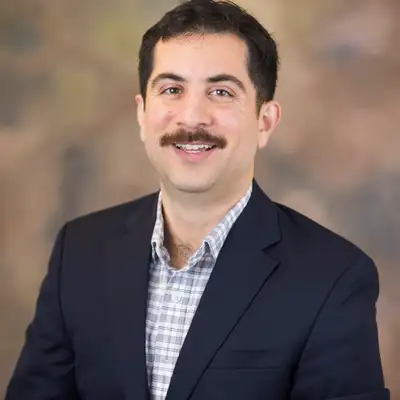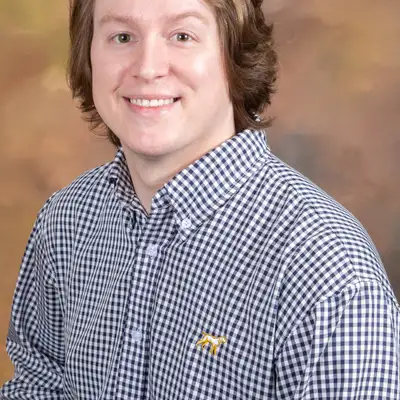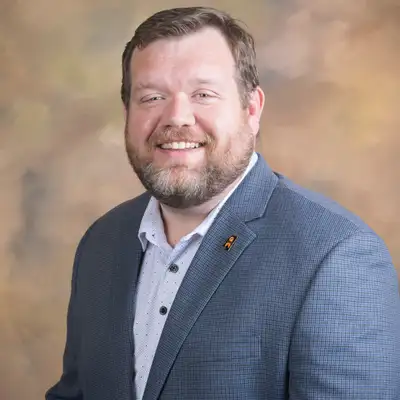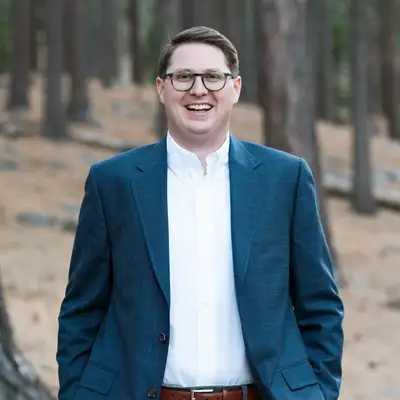
Legislative Session 2026: MDOT Governmental Affairs Director Nick Lewis
MDOT presents the Extra Mile Podcast.
Paul Katool:Welcome in to another edition of the Extra Mile Podcast presented by the Mississippi Department of Transportation. I'm Paul Katool, and as always, joined by my cohost, Will Craft. He's got that Southern Miss to the top. Polo on today. Big college baseball time.
Paul Katool:We know our guest is a big sports fan. Maybe we'll touch on that a little later. That's right. But we have MDOT Government Affairs Director Nick Lewis in the house with us today. Nick, thank you so much for stopping by and, talking to us.
Nick Lewis:Yeah. Of course. Glad to be here.
Paul Katool:Amazing. So, for those that don't know, you've been working a lot in Mississippi. You've done a lot in Mississippi, but kind of like briefly take us through your career that's led to here at the Mississippi Department of Transportation.
Nick Lewis:Yeah. So I got started when I graduated college working for the state senate under Lieutenant Governor Tate Reeves in his last legislative session over there. After that session, which would have been April 2019, I went to work on his campaign. I moved back to Oxford, God's country as some of us know. And, I worked on his campaign in North Mississippi until November and then was hired on to work in the governor's office, which, is where I met, our executive director, Brad White, when he was the transition director, which I also worked on.
Nick Lewis:And, spent about a year and a half in the governor's office before moving to Washington DC where I briefly worked for the Congressional Sportsman's Foundation, where I lobbied for hunting and fishing policy across the Mid Atlantic. And then I got that campaign that again, a friend of mine from the '19 Reeves campaign called and asked if I wanted to do a US Senate race in Nevada. And, I've always loved the West and the mountains. So my my wife and I thought we'd give it a try. So I went out there.
Nick Lewis:We lived out there for a year for that campaign and then, were were unfortunately unsuccessful in that race, challenging an incumbent that year. After that, I went to Florida to work for governor Ron DeSantis, where I worked there for about the same amount of time. I I worked in his political operation. Starting out, we did his book tour in early twenty twenty three, which was right after his reelection to to to the governor's office. And then his presidential campaign when that kicked off, I guess, in May 2023.
Nick Lewis:After that, my wife and I moved back out to Nevada. I started my own political consulting business, primarily focusing on state political action committees and state legislative races, where I did that for, I guess almost two years. And then my wife got pregnant and, you know, the West Coast as much as I love it is not my preferred place to raise a family. So, you know, Brad had tried to get me back to Mississippi for some time. So we decided to, to move back that that was finally the time to make the jump.
Nick Lewis:So I flew down, about a year ago, in March and, met with Brad and then we moved back in June And, here I am today. So
Paul Katool:Amazing. That's jam packed. Yeah. You fit a lot in there.
Nick Lewis:Yeah. A lot of moves, in a in a short period of time, which is, you know, the campaign lifestyle not very suitable for raising a family. But, yeah, we're we're glad to be settled back back to being Jacksonian. So
Will Craft:Yeah. Look. And underhandedly, a pitch for Mississippi there. I mean, you know, you definitely had exposure to lots of other places and had spent some time there. But ultimately, like you just said, made the decision to wanna come back here and raise a family.
Will Craft:That's pretty cool. That's pretty cool. One thing I wanted to focus on real quick just for a second there, your time in the governor's office here in Mississippi. I think, you know, not necessarily super uncommon to have worked for a governor in some capacity. However, specifically the time that you were in the governor's office, lots of stuff going on, man.
Will Craft:That was kinda like what the height of COVID?
Nick Lewis:Yeah. Yeah. That's right. So the governor was inaugurated in January 2020, and we we kind of inherited to no fault to the previous governor riots at Parchman. Alright.
Nick Lewis:That yeah. And and there were some riots at some other prisons across the state. So that was that was the beginning was the prison riots. And then, and it would have been early March was when COVID hit. And then that was also the year that we had a record number of federally declared disasters, not counting COVID in 2020.
Nick Lewis:We had tornadoes and hurricanes. I remember the one that stood out was Hurricane Zeta, which hit, I think in November, October 2020. But yeah, was wild. I mean, the legislature was in session virtually the entire time that year too, with those, those extension resolutions, all the disasters. So yeah, it was a baptism by fire, if you Yeah.
Will Craft:Well, luckily, we got you to stick around even though you you took a little detour and then went to some other places. I don't I had some great experiences, but we're certainly glad to have you back. And how long have you been here now?
Nick Lewis:Since June of of last year. So what's that? Eight, nine months? Almost. Something like that.
Nick Lewis:Yeah. So we're, you know, it's it's been a blessing to be back. You know, this is my first time working for a a state agency, obviously, you know, having worked in in the governor's office and, you know, the atmosphere here is like a family, you know, I mean, it didn't take long for folks to accept me, despite being, you know, a new employee and everybody's been great to work with.
Will Craft:I thought he was going to say accept him because he's a Northerner.
Nick Lewis:No, I'm just kidding.
Will Craft:I'm just kidding. But I mean, I don't know if you even said that part. Born Ohio, right?
Nick Lewis:Yeah. Born in North Central Ohio. Grew up on the shores of Lake Erie. Beautiful place. You've ever had a chance to visit the Great Lakes region, it's truly one of the gems of America.
Nick Lewis:But unfortunately the winters are cold and I don't like cold weather. So, know, living in the South suits me well. Same here. Love it. No argument there.
Paul Katool:Come to the sip. Right?
Nick Lewis:That's right. That's what we said. Well, maybe not anymore.
Paul Katool:Yeah. Not anymore. Yeah. We haven't really figured out our our branding in Ole Miss yet. No.
Paul Katool:But it's all good. So, yeah, let's let's drill down a little more. So you're here. We're happy to have you here. So what do you kinda do in your your day to day job?
Paul Katool:Yeah.
Nick Lewis:Well, you know, that it it changes quite a bit. So, you know, I'm I'm Government Affairs Director, which, you know, a lot of folks think the legislative session, which we just wrapped up, which is obviously the primary focus, for three months out of the year and then every fourth year, four months out of the year. But the other nine months, it's a lot of county and local government work. Just this week, I know I had some conversations about you know, the city of Jackson, some projects they're working on, you know, communicating with the mayor's office and the mayor. We've dealt with some stuff in, Simpson County this week on on Highway 49.
Nick Lewis:So
Will Craft:There's God's country.
Nick Lewis:Yeah. Yeah. You know, so outside of the session, it's it's a lot more, implementation of of the work that we do, within the session. But, yeah, it's every day is different, and it's, you know, other duties as assigned is is kind of that role as well. So
Will Craft:And, I mean, I would even say to I know the amount of work you're doing that three months, four months period for the session. I mean, the the rest of those months, that that's how you get into the session. You're having those conversations, meetings with those different legislators on different committees to get ready for the session. So it does feel like it's never ending.
Nick Lewis:That's right. I'm sure. Yeah.
Will Craft:Well, like we just said, you know, man, just came through your first full session. I think you probably probably hear for dip some pieces of of things from last year's session as well, but just came through your full, first session. Did did we get everything we we were seeking?
Nick Lewis:Yeah. Yeah. For sure. You know, we're very fortunate to have two really great chairmans, in our house and senate policy committees, which would be the Transportation Committee and the Highways and Transportation Committees in the senate. That's going be Chuck Younger, in the house at Steve Massengill.
Nick Lewis:And and we're very fortunate to have two people that, we communicate with a lot and that are real advocates of the agency. Right before I came down, Sender Younger had texted me asking me to give him a call. You know, sessions over, everything's done and, you know, but, but we have a great working relationship. You know, the I think the one big takeaway is nothing terrible happened. You know, we did we did accomplish several of our priorities but but there was nothing bad that's going to impact the agency this next year which is always a big win.
Nick Lewis:You know, there, there's several things that we wanted to achieve. You know, the big policy priority this year, of course, was removing the sunset on the lottery. When, when they passed the lottery a number of years ago, the first 80,000,000, was diverted to the Department of Transportation. In that law, of course, you know, we're supposed to use it first to match any federal funding. But we've been fortunate that the last five years since, Federal Highways was reauthorized and Sender got us an extra $1,000,000,000 that that the legislature has given us that match money.
Nick Lewis:So we've been able to use the lottery money for, whatever we want to. And the commission decided to use that, to pave our rural two lane highways. So, you know, with the about $550,000,000 that we've received since its inception, we've paved over 3,100 lane miles, which is, you know, which is huge. I mean, these were roads that were not getting paved as frequently, before we had this money. So getting that dedicated highway funding, is is huge.
Nick Lewis:And obviously, it got done relatively early in the session. I mean, it was, I think it was the third bill signed by the governor this year, which just speaks to how everybody across the street, you know, kind of prioritizes transportation, especially, you know, Representative Massingale and Sender Younger. And then everything else, you know, that we dealt with was primarily money related this session.
Will Craft:Good deal. Yeah. Lots of good stuff always. And I know as you just mentioned, removing those sunsets, it does allow us it's know, we love one time money. We'll take it.
Will Craft:We're certainly not gonna turn it away, but something that allows us to forecast and and rely on not only for MDOT purposes, for federal highway purposes, but as well as the private sector. I know we've said this before. You know, those guys out there knowing that they're gonna have that you know, those those projects coming to be able to staff up their workforce equally is important.
Nick Lewis:Yeah. I think that's a great, you know, that's a great point. And to give you an example of that, I know that we had, we had a contract that we advertised for in East Mississippi that that called for in the specs called for a a different size milling machine than what's typically used. And, you know, the contractors called and they said, look, you know, we don't mind, you know, using this milling machine, but if if we're going to start using it, we'd like to, you know, invest in that with our capital. So to your point about contractors kind of being able to know ahead of time, you know, can I spend the $3,000,000 Will it pay off?
Nick Lewis:You know, it's really big for them. Obviously, the milling machine example is just one, but, know, same thing with the dedicated funding. If if they know that they're going that there is going to be 80,000,000 in dedicated, you know, paving money every year for these roads, they can invest in in infrastructure and assets for their company. That's gonna make it more worthwhile. They can get better technology because they know the contracts are gonna be there with that dedicated funding.
Will Craft:Wow. We love it.
Paul Katool:Yeah. Love to have it. For sure. Makes you think there's a lot of stuff in action there. Some capacity projects, a little bit of additional money for those.
Paul Katool:Want to touch on that?
Nick Lewis:Yeah. So, we've got three outstanding capacity projects currently that are set to be, set to have pre construction completed this year or, the beginning of next year, in the order of which those will be completed or are completed is I-fifty 5 in Madison County. So that's going to be an expansion from 463 up to Gluck Stat. If I recall, it's about 3.5 miles. The reason we're expanding that is because, the reunion before we build the interchanges at Reunion Parkway, we have to expand the highway to build those interchanges.
Nick Lewis:So that work would be the interchanges and the expansion of course. The next project is Highway 25 out in Rankin County. So that's obviously Lakeland Drive. That's gonna be Grants Ferry to 471. So for those that live out there that's in that section where Pine Lake Church is, I think there's there may be a school out there too.
Nick Lewis:I'm a Jacksonian, but yeah. And then the the third project there that's gonna be finished, early next year is gonna be I 55 in DeSoto. The the amount outstanding for those three projects based on current estimates is about 300,000,000. Legislature, we're very fortunate. They gave us 150,000,000 there was a bill earlier this session to give two sixty five million dollars to the capacity fund, which we think would be about right for the Madison and Rankin County projects.
Nick Lewis:We only ended up getting $150 which we're very thankful for. Right now though, what we're trying to work through is how to find the rest of the money. Obviously, we build projects in order which the pre construction is completed. So the first project that we would pay for is Madison County 55. The next project would be Rankin County.
Nick Lewis:That Madison County project, the amount we received in the capacity fund, which was unallocated. So it just, it goes to the fund and then we decide, you know, which project is next and Madison County is next, because it was completed first. That's less than what our cost estimates are, to some degree. So what we're trying to do right now is figure out how to come up with the rest of our money out of our existing budget. I think there's a, there can be a misperception sometimes with the public, with, with elected officials that, you know, when we get money either from this legislature or from the federal government that we just leave it sitting in a bank account for, you know, for someone to tell us, hey, go do this project.
Nick Lewis:Well, you know, we program all of our funds.
Will Craft:Right.
Nick Lewis:So, you know, when when Federal Highways is reauthorized for five years, you know, we immediately start planning and allocating those funds. So it's not so easy to come up with $50.75, because a 100,000,000 all of our money is planned out years in advance for projects. So, you know, it's a challenge to to scrape up. You know, like I said, we've got a 150,000,000 from the legislature need 150 to complete those three projects we're estimating. You know, that's just not something we have lying around that we can spend.
Nick Lewis:I mean, of course, we keep cash for emergencies, but, you know, capacity projects aren't emergencies. Right. So so we're working through that right now and hopefully we'll have some news in the next couple months as as we work through that. But, we're very fortunate. The legislature with that appropriation has invested over a billion dollars into the capacity fund in the last five years, separate from our regular budget.
Nick Lewis:I don't know the history obviously because I've not been here at MDOT as long as some others, but I told Brad that I don't know when the last time that the legislature has invested that much money in such a short amount of time specifically for expanding the capacity on existing systems. I mean, I really think that it's going to be, you know, go down in the history books is one of the biggest investments probably since the four lane highway program. And it's just incredible.
Will Craft:Amazing. Yeah. I would second that. I mean, it really is we've been we've been in a great place the last few years, as far as infrastructure and conversations go funding wise. And I'm gonna steal something from Brad here.
Will Craft:Not that I've I quote this dude frequently, our our boss man, and it's true. I mean, you know, no matter how good your school system is, if the school bus can't cross the bridge. You know?
Nick Lewis:That's right. That's right.
Will Craft:If the if the health care system is fantastic, but the ambulance can't get you there because of the roadways. So I I do think we've really got people focused on the core function of government that infrastructure is.
Nick Lewis:No. And I think that's a great point. You know, we talked about this earlier in the session. You know, obviously there's always a lot of conversations about education, which is really important. But concurrently with that, they're certainly not competing as transportation funding, right?
Nick Lewis:I mean, like you said, the school buses have to get on our routes. And, know, one of those programs is our lottery paving program. I mean, those rural two lane highways, the school buses travel those and you know, those are some of the ones in most need and you know, it's obviously really important for the schools that those buses stay in good shape because it's a capital expense for them.
Will Craft:Sure.
Nick Lewis:And it's important that our kids get there safely. So, yeah, I mean, those those two go hand in hand. I mean, everybody, you know, we all had to drive to work today. None of us live here at the the MDOT Building. So and we had to get on our roads to do that.
Will Craft:No doubt. Yeah. All hot all highways from my house here, basically, for me. Paul, you got a little shorter route, but, yeah,
Paul Katool:lots of highways to do I walk to work. No. We're Belhaven. So it's pretty it's about a five minute drive, but, you know, certainly use the interstate and highway system.
Nick Lewis:I was gonna say, I guess, isn't State Street old Highway 51, technically, I I think?
Will Craft:So Don't quote me on that. I think I think it maybe it is old.
Nick Lewis:On State Street, I think that's that's technically old Highway 51. So there
Paul Katool:you go.
Nick Lewis:We're just Not only municipal streets. That's
Will Craft:right. No. Not at all. And that is still city Of Jackson Street right now.
Nick Lewis:It is.
Will Craft:It is. We appreciate that. It is looking better. It is looking good out there.
Paul Katool:It looks great. Yeah.
Will Craft:Shout out to city of Jackson on that. Nice and smooth. Yeah. Actually, just shout out to to city of Jackson and Merrittorn. I mean, I do think there's a lot of good things.
Will Craft:A lot of positivity going on. Not directly what we're talking about. But
Nick Lewis:Yeah.
Will Craft:I mean, yeah. Happy about Wade Jackson's turnaround these days.
Paul Katool:No doubt. Shout out to the two two two time guest, Mayor Horn.
Nick Lewis:That's
Paul Katool:right. And I know we kinda talked about what we got earlier, but we want to mention that was earmark free
Nick Lewis:as well. Earmark free. Well, yeah. Yeah. So then getting back to our appropriation bill, you know, so the capacity money was obviously really important that came in a separate bill.
Nick Lewis:And we also got some additional funding in that separate bill. We got $40,000,000 for our match, which I had mentioned earlier. You know, so the federal government, know, five years ago when they reauthorized federal highways, we got an additional $1,000,000,000 from them. Our match annually for that amount, excuse me, is about 40,000,000. So we we spend 40, to for to unlock 160, which comes to about 200,000,000 per year over this five year period.
Nick Lewis:So, by the legislature giving us that money in a special appropriation, we don't have to take that out of our budget. Again, money, I mean, we all know this but I think sometimes people forget money is zero sum if if the legislature had not given us that year, something would have been cut. Yeah. You know, mean, we would have taken from somewhere we would have taken from paving, you know, it would have had to come from somewhere. So that 40,000,000 was also with the 150.
Nick Lewis:And then we also got an additional 10,000,000 for the strategic multimodal fund, which is for airports, rails, and ports. So, we we do an application process for that in the fall and then award those grants out, in the 10,000,000. You know, we, we have some dedicated funding for that as well, but that's only 2 or 3,000,000. But with the 10,000,000 that the legislature gave us, that makes that amount a lot more worthwhile to do an application process every year. You know, if we were just relying on on the dedicated funding that we get from House Bill one last year for strategic multimodal, you know, 3,500,000.0 split three ways is not a lot.
Nick Lewis:We'd probably have to wait to do it every every few years. So having that extra 10,000,000 that they gave us for a total of 200,000,000 is is really big. And it and it gets spread across, you know, different things. And like I said, 40,000,000 to unlock 160 is huge.
Paul Katool:Right.
Nick Lewis:Without us having to use that 40,000,000 from somewhere else. So that was our supplemental appropriation which was in a different bill. We of course had a regular appropriation bill. Excuse me this year. House bill nineteen thirty eight which you know, we I have to give a big shout out to Representative Carl Oliver who chairs our transportation committee in the house and Senator Mike Thompson from the coast who chairs our Transportation Committee Appropriations Transportation Committee in the Senate.
Nick Lewis:Those two, as well as some of our other conferees like Angela Cockerham and Bart Williams, Steve Massengill, you know, those people that I just named were were so helpful. And and Carl and Mike are really where we got to where we were. When our appropriations bill was introduced this year, it had a our salary line item 4 and a half million dollars short of our projections for next year. So, you know, obviously that would have been catastrophic to the agency. We, you know, we'd had to probably have a reduction in force, depending on how many retirements we had at the June.
Nick Lewis:But even had we had $4,500,000 worth of retirements at the June, we would have been on a hiring freeze for the entire year. We couldn't have filled those positions. You know, I know y'all are too young, but if if you were retirement age and you left, we wouldn't have been able to fill that position. Right. So that would have been really, really, really, catastrophic to the agency.
Nick Lewis:In addition to that, when the bill was introduced, it also had, our our total authority about $83,000,000 shy of our request and $4,000,000 shy of what they gave us last year. So, and and the reason that's important is because, you know, with the fuel tax revenue kicking in this year, that's we needed about a $100,000,000 of extra authority. So let me back up a little bit. So the way that our budget works is we're a special fund agency. So they passed legislation at some point to to give us money right away.
Nick Lewis:So that the the money like the fuel tax money that's diverted right into our special fund. Aside from that, we get about, I think, 100,000,000 from the feds. Then we get the the lottery money, of course. So these are some of our those are big revenue sources. Fuel tax, lottery, what the feds give us.
Nick Lewis:The legislature every year has to give us the authority to spend that money that's in our account. So we have that money whether we have the authority or not.
Will Craft:Right.
Nick Lewis:You know, for small dollar examples, you know, we get two, let's say we get $200 a year in our in our special funds. If the legislature gives us the authority to spend 150, we'll still have the other 50 sitting in our account. We just can't spend it. So so getting back to our bill, you know, we were expecting an additional the the fuel tax revenue for this year is gonna be about a 100,000,000. We're only expecting a net increase of about $8,085,000,000 because there's some reductions in other revenues, which is just not uncommon.
Nick Lewis:It happens. But but our bill, when it was written, didn't give us authority to spend that money. So, you know, obviously, the citizens of the state, you know, think paying a little bit more in taxes at the pump are really important. It's important to them. It's important to their pocketbook.
Nick Lewis:So we, you know, really emphasize to our our two chairman of our transportation appropriations committees, you know, y'all have to give us the authority to spend the money that we have. Otherwise, you know, that everybody would be up in arms. Luckily, we got there. And and with our salaries, we got to a spot where, that number is gonna be about what our actuals are projected to be for next year. And they gave us, half of what we asked for for progressions for our lowest paid blue collar employees.
Nick Lewis:So we will be able to do some salary adjustments, you know, across the agency, but it's certainly not what we had asked for. But but again, our our our two, you know, subcommittee chairman, for appropriations that covers transportation were our our two biggest allies across the street. Without them, who knows what we'd be talking about right now. And and we averted disaster, we'll come back to to fight that fight again next year. So
Will Craft:Love that. Awesome. Certainly shout out to those folks. We appreciate it. I don't particularly want to be fired, so, thank you for letting us stick around.
Will Craft:We do appreciate it very much. So no. Seriously. And thanks, Nick, for all that. That's a a a load of information, man.
Will Craft:I appreciate you keeping up with all that stuff and running the show across the street for us. By all accounts, at least for my opinion, excellent work, man. We appreciate you. Paul, with that, I think we got just a couple of fun questions Oh, yeah. To round out the day here for Nick.
Will Craft:I'll kick us off. And, Nick, I'm sure you I know you've listened religiously to every episode of our podcast. So that we've gotten away from a little bit, but a couple of fun questions we'd like to ask folks at the end. I know you're gonna have some great answers, but I'll I'll I'll ask you. Let's see.
Will Craft:Let's keep it in Mississippi. But if you really just got one that's a favorite outside, by all means. A favorite place to eat, man. Somewhere maybe that you don't get to go very often or, hey. We're gonna be in this area.
Will Craft:Got to stop by here. Anything come to mind?
Nick Lewis:Yeah. Handy Andy, Oxford, Mississippi.
Will Craft:Handy Andy.
Nick Lewis:Yep. Okay. It's a it's a great great place to get a burger. It's one of my favorites. You know, preferential to Oxford, of course.
Nick Lewis:Another favorite up there is South Depot. But if I if I had to pick one, Handy Andy for sure.
Will Craft:I don't think I've ever heard either one of those.
Paul Katool:Yeah. Well, next time we're in Oxford, we're taking a handy Andy's will. Yeah.
Will Craft:Put them on the list.
Paul Katool:Me. Listen. How are the prices there still? I haven't been in quite some time. You should be able to get a hamburger or cheeseburger.
Paul Katool:Huge cheeseburger for, like, dollars.
Nick Lewis:Yeah. It's a little bit more than that. Oh, man. You know, I I did take Brad. We we went to Tupelo shortly after the ice storm, for an event with Christy Nome, and I I took Brad there, and it was his first time.
Nick Lewis:And, you know, he said that's his favorite burger in the state too.
Paul Katool:Oh, wow. Oh, okay. Yeah.
Nick Lewis:Big big you know, obviously, Zips is another place that we we like to get burgers, but Thank you for Andy Andy's is yeah. I mean, that's it's definitely top of the list for me.
Will Craft:Put it on there. Let's go.
Nick Lewis:Yeah. Love it. Love it.
Paul Katool:Okay. So we also, we see a lot of music in the division. I know you're friends with Michael Flood, our PIO, big music guy. Always gotta shout him out. Yep.
Paul Katool:But we well, we see a lot of music. So what's your concert that you, in the past that you would shout out is maybe the biggest one you've ever been to?
Nick Lewis:Well, I, you know, growing up on the Great Lakes, you know, we've obviously got a lot of shipping up there and and all of my mom's brothers, my mom's the oldest of seven, all of her brothers worked on the lake freighters at some point in their life, usually after high school while they were on their eight year college program for bachelor's, something like that. And, you know, so so, you know, the sailing lifestyle, being a sailor was was big for me growing up. Living you know, having the beach. So Jimmy Buffett was always one of my favorites. And, you know, my my now wife and I were fortunate, years ago to be able to attend about four or five concerts before he passed.
Nick Lewis:And and, you know, that that's all time one of my favorites. It's just very nostalgic for me. You know, I grew up listening to it as a kid. You know, my uncles are big parrot heads too. And, you know, for context, you know, my mom's the oldest of seven.
Nick Lewis:So my youngest uncle is now only nine years older than me. So, you know, they're, you know, kind of more like, you know, kind of more like brothers. It's not like some old old dude uncle. You know? So always looking up to them, listening to to Jimmy Buffett, is, you know, those were my favorite concerts.
Nick Lewis:Been to some country music concerts too. But, yeah, Jimmy Buffett's, very nostalgic for me, and of course, you can't go see him anymore. So, yeah, Southern Miss guy. That's right.
Will Craft:Now I love that answer.
Nick Lewis:Yeah. I I you know, Mikey is trying to get me on fish. You know? You know? He's big.
Nick Lewis:Yeah. Not not quite there yet. He assures me he'll get me there someday, but, not there yet.
Will Craft:You gotta have some time on your hands. Yeah. Yeah.
Nick Lewis:Sure. Long That's songs.
Paul Katool:He got me. We love a good thirty minute jam That's right. In the night. That's right. There we go.
Paul Katool:Yeah. Well, Nick, thank you so much for joining us. And like Will said, just super sharp guy, one of the many people, really smart people at MDOT working behind behind the scenes. Thank you for stopping by.
Nick Lewis:Yeah. Of course. And, again, I just wanna thank y'all and obviously the the legislative folks that I mentioned, you know, Steve Massingale, Chuck Younger, Carl Oliver, Mike Thompson. Those are big advocates for us over there.
Will Craft:No
Nick Lewis:doubt. And without them, you know, we wouldn't have a lot of the stuff that we have today and and could not be more grateful for them. And obviously a great team of folks to work with here. I I did wanna say just one more thing real quick, you know, working through the ice storm, had mentioned to Brad and a couple others, you know, I've worked with a lot of great folks, moved, lived all over the country, worked for governor DeSantis, obviously had a top notch operation there. I work with and we work with some of the the most intelligent folks in their fields that I've ever come across, you know, and and we're we work at a state agency, you know, nobody's getting rich here, you know, but but there are people that choose to be public servants that work here every day, that no doubt can make double or triple in the private sector, but do it because they care about Mississippi.
Nick Lewis:And it's it's been really impressive to me. I think, you know, state government gets a bad rap sometimes, but we truly have professionals here that are at the top of their field, that that dedicate, you know, their time to to MDOT. And, it's just really been a pleasure to work with them.
Paul Katool:Well said. No doubt. Cosign that. Absolutely.
Nick Lewis:That's our
Paul Katool:clip right there. Yep. Nick, thank you so much. We'll go ahead and end things there. We want to thank our listeners, viewers for tuning into the Extra Mile Podcast.
Paul Katool:You can watch and listen to episodes by visiting gom..com forward slash theextramile. Follow us on social media at Mississippi DOT is the handle. We went we want to thank our editor producer Drew Hall for holding things down behind the scenes there, and remember to drive smart out there on Mississippi Highways.
Creators and Guests